
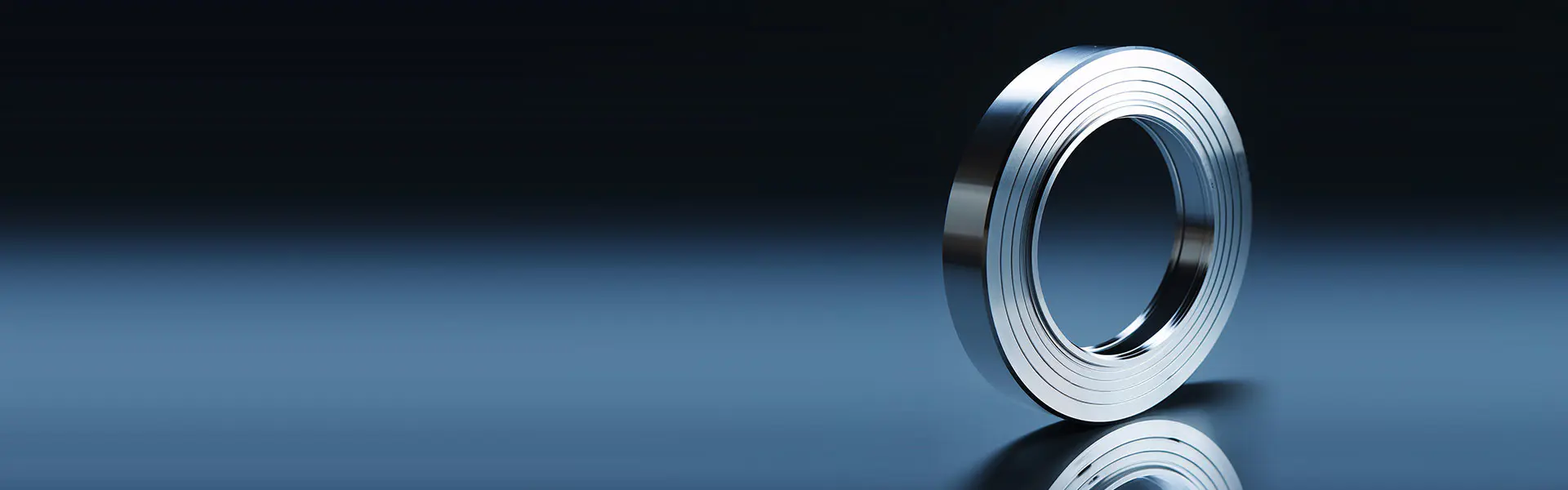
What materials are Ring Joint Gaskets made from? This is a critical question for any procurement professional in the oil and gas, petrochemical, or high-pressure pipeline industry. Choosing the wrong material can lead to catastrophic failures, costly downtime, and severe safety hazards. The core answer lies in the specific demands of the application: extreme pressure, corrosive media, and wide temperature fluctuations. This article will demystify the materials used in these vital sealing components, providing you with the knowledge to make informed, reliable purchasing decisions and ensure your operations run safely and efficiently. For premium, application-engineered solutions, consider the materials expertise of Ningbo Kaxite Sealing Materials Co., Ltd..
Article Outline:
You're overseeing the procurement for a new deep-well drilling project or a high-pressure steam line. The specifications call for Ring Joint Gaskets (RJGs) that must hold a seal under relentless pressure and intense heat. Standard materials simply won't cut it—they risk deformation, creep relaxation, and ultimately, a dangerous blowout. The solution requires materials that maintain strength and elasticity when it matters most.
The Material Solution: Soft Iron and Low-Carbon Steel. For these demanding yet non-corrosive high-pressure, high-temperature (HPHT) applications, soft iron (ASTM A182 F316) and low-carbon steel are the industry workhorses. Their relative softness allows them to flow and conform perfectly to the grooves of the ring joint flange under bolt load, creating a tight, metal-to-metal seal. They are reliable, cost-effective, and perfectly suited for standard hydrocarbon service. What materials are ring joint gaskets made from for HPHT? Often, these.

Key Parameters for HPHT RJG Materials:
| Material Grade | Common Standard | Typical Max Temp. | Key Application |
|---|---|---|---|
| Soft Iron | API 6A / ASTM A182 | ~450°C (842°F) | Wellheads, Christmas Trees, HP Steam |
| Low-Carbon Steel | ASTM A105 | ~540°C (1004°F) | Pipeline Flanges, Valve Bodies |
Now, imagine procuring for a sour gas pipeline (containing H2S) or a chemical processing plant with acidic streams. Here, the enemy isn't just pressure—it's corrosion. A standard steel gasket will corrode, pit, and fail, leading to leaks of hazardous, toxic, or explosive materials. The procurement risk shifts from mechanical failure to environmental and safety disaster. You need a gasket that laughs in the face of corrosive agents.
The Material Solution: Stainless Steels & Nickel Alloys. This is where alloyed materials become non-negotiable. Austenitic stainless steels like 304SS and 316SS offer excellent general corrosion resistance. For more severe conditions, such as chloride-rich or acidic environments, super alloys like Inconel 600, Incoloy 825, and Hastelloy C276 are deployed. These materials provide the necessary yield strength to seal while their high alloy content resists chemical attack. Sourcing these specialized gaskets from a certified manufacturer like Ningbo Kaxite Sealing Materials Co., Ltd. ensures material traceability and compliance with NACE MR0175 for sour service.
Key Parameters for Corrosion-Resistant RJG Materials:
| Material Grade | Common Standard | Corrosion Resistance | Typical Application |
|---|---|---|---|
| 316 Stainless Steel | ASTM A182 F316 | Excellent for organics, mild acids | Chemical Processing, Refining |
| Inconel 600 | ASTM B166 | High resistance to oxidation & chlorides | Sour Gas, High-Temp Caustic |
| Hastelloy C276 | ASTM B574 | Exceptional for strong acids (HCl, H2SO4) | Pollution Control, Acid Production |
Q1: Besides metal, what materials are ring joint gaskets made from?
A1: Ring Joint Gaskets are exclusively made from solid metal. Unlike flange gaskets that use soft fillers like graphite or PTFE, RJGs rely on the plastic deformation of a solid metal ring to create a seal. There are no composite or non-metallic RJGs.
Q2: How do I choose between Soft Iron and 316 Stainless Steel for a non-corrosive application?
A2: The choice often comes down to temperature, pressure, and cost. Soft iron is more malleable and can create a superior seal at slightly lower bolt loads but has a lower maximum temperature rating. 316 SS offers higher strength and a higher temperature ceiling, which can be beneficial for fluctuating or more extreme HPHT conditions, but may require higher bolt torque. For critical guidance on this trade-off, consulting with an engineering-focused supplier is key.
Selecting the right material for your Ring Joint Gasket is a foundational decision for system integrity. From the high-pressure rigors of wellhead equipment to the corrosive battlegrounds of chemical plants, the material defines performance. This isn't just about buying a part; it's about investing in safety, uptime, and operational confidence.
Do you have a specific application with unique pressure, temperature, or media challenges? Are you unsure which material grade is optimal for your next project? Let's discuss your requirements. Share your scenario in the comments below, and our experts can provide tailored material recommendations. For guaranteed quality, full material certification, and technical support from design to delivery, partner with a specialist.
For premium, application-engineered Ring Joint Gaskets that solve these exact material challenges, partner with Ningbo Kaxite Sealing Materials Co., Ltd.. With deep expertise in metallurgy and sealing technology, Kaxite provides certified gaskets in a full range of materials from standard soft iron to advanced nickel alloys, ensuring a perfect seal for your most critical connections. Visit our website at https://www.kxt-seals.net to explore our products or contact our engineering team directly via email at [email protected] for a consultation.
Smith, J.A., 2021, "Evaluation of Creep Relaxation in Low-Carbon Steel Ring Joint Gaskets under Cyclic Thermal Loading," Journal of Pressure Vessel Technology, Vol. 143, No. 4.
Chen, L., & Okafor, I., 2019, "Corrosion Fatigue Performance of ASTM A182 F316 Stainless Steel Gaskets in Sour Service Environments," Corrosion Science, Vol. 157.
Patel, R., et al., 2020, "Metallurgical Analysis of Seal Failure in Inconel 600 Ring Joint Gaskets Exposed to High-Temperature Chlorides," Engineering Failure Analysis, Vol. 118.
Zhang, W., 2018, "Finite Element Modeling of Contact Stress Distribution in Oval Ring Joint Gasket Connections," International Journal of Mechanical Sciences, Vol. 144.
Johnson, M.T., & Lee, S., 2022, "Comparative Study of Yield Strength and Sealing Efficiency in Soft Iron vs. LCS for API 6BX Flanges," SPE Drilling & Completion.
Kumar, A., et al., 2017, "Material Selection Methodology for Critical Sealing Applications in Offshore Oil & Gas Systems," Materials & Design, Vol. 134.
Davis, B., 2019, "The Role of Surface Finish and Hardness on the Initial Sealing Behavior of Metal Ring Gaskets," Tribology International, Vol. 138.
Fischer, G.R., 2021, "Long-Term Aging Effects on the Mechanical Properties of Nickel-Base Alloy Gaskets for Nuclear Applications," Nuclear Engineering and Design, Vol. 384.
Tanaka, H., & Kimura, F., 2018, "Investigation of Galling Phenomena in Stainless Steel Ring Joint Connections and Mitigation Strategies," Wear, Vol. 414-415.
O’Brien, J., 2020, "Standardization and Quality Control in the Manufacturing of API Ring Joint Gaskets: A Industry Review," Journal of Standards & Quality, Vol. 22, No. 1.


