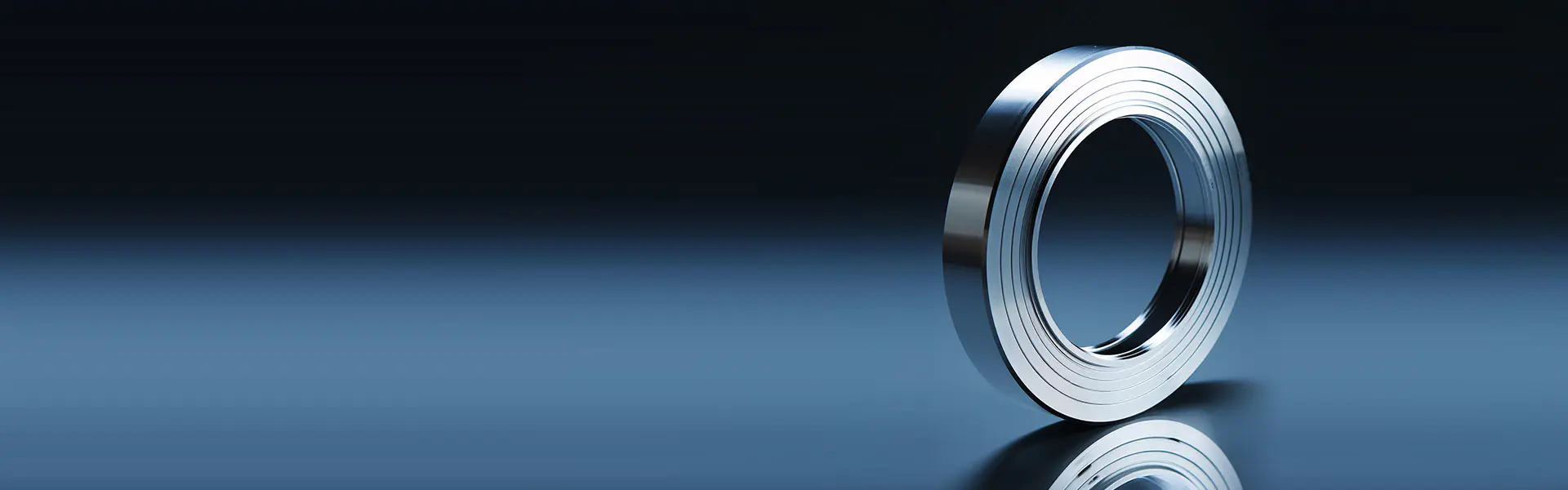
Die-formed Graphite Rings represent a pinnacle of engineering in the sealing industry, offering unmatched performance in extreme environments. At Kaxite Sealing, we specialize in manufacturing high-precision die-formed graphite rings that are essential for applications demanding reliability under high temperatures, corrosive media, and challenging pressure conditions. Unlike machined or molded alternatives, our rings are formed using specialized dies under high pressure, resulting in a product with superior structural integrity, consistent density, and minimal porosity. This process ensures every ring meets exact specifications, providing a perfect seal with exceptional longevity and minimal maintenance requirements.
The core advantage of Kaxite Sealing's die-formed graphite rings lies in their material purity and manufacturing precision. We use high-quality, flexible graphite (exfoliated graphite) that is compressed into a homogeneous structure without the use of binders. This creates a seal that is self-lubricating, chemically inert to most media, and capable of operating in temperatures ranging from cryogenic levels up to 3000°F (1650°C) in non-oxidizing atmospheres. Whether for static or dynamic applications, our rings provide a reliable barrier against leakage in pumps, valves, compressors, and reactors across industries like chemical processing, petrochemical, power generation, and aerospace.
**Key Product Parameters and Specifications**
To understand the technical superiority of Kaxite Sealing's die-formed graphite rings, let's examine the critical parameters that define their performance.
**Material Properties:**
* **Base Material:** Premium Flexible Graphite (Reinforced options available with Inconel, SS foil)
* **Temperature Range:**
* **Inert/Reducing Atmospheres:** -400°F to 3000°F (-240°C to 1650°C)
* **Oxidizing Atmospheres:** Up to 800°F (430°C) with special anti-oxidant treatments
* **pH Range:** 0-14 (Highly resistant to most acids, alkalis, and organic solvents)
* **Thermal Conductivity:** High, excellent for heat dissipation
* **Compressibility:** 40-60%
* **Recovery:** 15-30%
* **Density:** 90-110 lb/ft³ (1.44-1.76 g/cm³) – customizable based on application pressure
* **Coefficient of Friction:** Low, providing self-lubrication
**Standard Design Specifications:**
| Parameter | Specification Range | Notes |
| :--- | :--- | :--- |
| **Inner Diameter (ID)** | 0.25 in to 120 in (6 mm to 3000 mm) | Custom sizes beyond this range available on request. |
| **Outer Diameter (OD)** | 0.75 in to 125 in (19 mm to 3175 mm) | Tight tolerances maintained for precise gland fit. |
| **Cross-Section (Width)** | 0.0625 in to 1.0 in (1.5 mm to 25 mm) | Standard cross-sections; others are custom-engineered. |
| **Pressure Rating** | Up to 3000 psi (200 bar) for static seals | Higher pressures achievable with customized designs and reinforcement. |
| **PV Value** | Up to 300,000 psi-ft/min | Suitable for demanding rotary and reciprocating motion. |
| **Surface Finish** | Smooth, uniform finish on all surfaces | Minimizes friction and wear on mating surfaces. |
| **Reinforcements** | Available (Common: SS 304/316, Inconel, Monel) | Increases tensile strength, prevents blow-out in high-pressure or high-speed applications. |
**Common Available Styles:**
* **Plain Rings:** Standard die-formed rings for general service.
* **Reinforced Rings:** With metal insert or foil overlay for enhanced mechanical strength.
* **Profile Rings:** Custom shapes (e.g., U-shaped, V-shaped) for specific gland designs.
* **Anti-Extrusion Rings:** Often combined with primary rings to prevent material extrusion in high clearances.
**Selecting the Right Ring: A Technical Guide**
Choosing the correct die-formed graphite ring requires careful analysis of the operating conditions. Here is a simplified guide:
1. **Determine the Application Type:** Is it static (flanges, manways) or dynamic (rotary shafts, reciprocating rods)?
2. **Identify Media and Temperature:** Confirm chemical compatibility and the maximum/minimum operating temperature, including thermal cycling.
3. **Define Pressure Conditions:** Know the system pressure, pressure cycles, and the direction of pressure (internal or external).
4. **Measure Gland Dimensions Precisely:** Accurate measurement of the shaft/rod diameter, housing bore, and gland depth is critical for correct sizing and compression.
5. **Consider Environmental Factors:** Presence of abrasive particles, potential for oxidation, and required standards (FDA, USP Class VI, etc.).
**Frequently Asked Questions (FAQ) About Die-formed Graphite Rings**
**What is a die-formed graphite ring and how is it different from a machined ring?**
A die-formed graphite ring is manufactured by compressing high-purity flexible graphite into a precision die under high pressure, creating a ring with uniform density and grain orientation. Unlike machined rings, which are cut from a block of graphite, die-forming produces no material waste, offers superior consistency in cross-section, and results in a stronger, more homogeneous structure with better sealing performance and longer life.
**What are the primary advantages of using Kaxite Sealing's die-formed graphite rings?**
The primary advantages include exceptional thermal stability, excellent chemical resistance, reliable performance under extreme temperatures, self-lubrication which reduces wear on mating surfaces, high compressibility allowing for effective sealing of imperfect surfaces, and resilience against thermal and pressure cycling. Our die-forming process guarantees dimensional accuracy and material consistency in every batch.
**In what types of applications are die-formed graphite rings most commonly used?**
They are critical in severe-service applications across industries: in chemical and petrochemical plants for sealing pumps and valves handling corrosive fluids; in power generation for turbine seals and high-temperature flanges; in aerospace for engine and fuel system components; in refineries for hot oil services; and in any application involving heat exchangers, compressors, or reactors where elastomers or other materials would fail.
**Can die-formed graphite rings be used for both static and dynamic sealing?**
Yes, they are highly versatile. For static sealing, they perform excellently in flange gaskets and spiral-wound gasket fillers. For dynamic sealing, they are successfully used in rotary shaft seals, reciprocating pump rods, and valve stems, especially when reinforced with metal to prevent radial cracking under motion and high pressure.
**How do I select the correct density for my application?**
Density is directly related to the sealing pressure and recovery. Lower density (e.g., 90 lb/ft³) rings are softer, more compressible, and ideal for low-pressure applications or uneven surfaces. Higher density (e.g., 110 lb/ft³) rings are harder, offer greater resistance to extrusion, and are used for higher pressure applications. Kaxite Sealing engineers can recommend the optimal density based on your specific pressure, temperature, and gland design.
**What does "reinforced" mean, and when is it necessary?**
Reinforcement involves incorporating a metal insert (like stainless steel or Inconel) within the graphite or adding metal foil facings. This is necessary for dynamic applications with high peripheral speeds, high-pressure systems where blow-out is a risk, or for handling large pressure differentials. Reinforcement greatly enhances the ring's tensile strength and dimensional stability while maintaining the graphite's sealing properties.
**Are there limitations to using graphite rings? What should be avoided?**
While extremely versatile, graphite is not suitable for strongly oxidizing atmospheres at high temperatures without special anti-oxidant impregnation. It is also not recommended for applications with strong oxidizing acids (like nitric acid) at high concentrations. Always consult Kaxite Sealing's chemical compatibility charts. Additionally, proper gland design is crucial; excessive clearance can lead to extrusion, while insufficient compression can cause leakage.
**How do I install a die-formed graphite ring correctly?**
Installation is straightforward but requires care. Ensure the gland and mating surfaces are clean, dry, and free of burrs. For split rings, stagger the end gaps by 90 to 180 degrees. For spiral-wound gaskets, follow standard bolt-tightening patterns and torque values. Avoid twisting or over-stretching the ring during installation. Applying a thin film of water- or solvent-based graphite lubricant can aid installation but is often not required.
**What certifications or standards do Kaxite Sealing rings comply with?**
Kaxite Sealing products are manufactured in facilities compliant with ISO 9001 standards. Our materials can be supplied to meet various industry standards such as API 607/6FA, ASTM, and DIN. Materials for food, pharmaceutical, or potable water applications can be provided to meet FDA regulations and USP Class VI requirements upon request.
**How does the performance and cost compare to PTFE or elastomeric seals?**
Die-formed graphite rings typically have a higher initial cost than standard PTFE or elastomer seals. However, their lifespan in extreme conditions is significantly longer, leading to lower total cost of ownership due to reduced downtime, maintenance, and replacement frequency. They perform reliably where PTFE would cold-flow or degrade and where elastomers would melt, harden, or chemically decompose.