
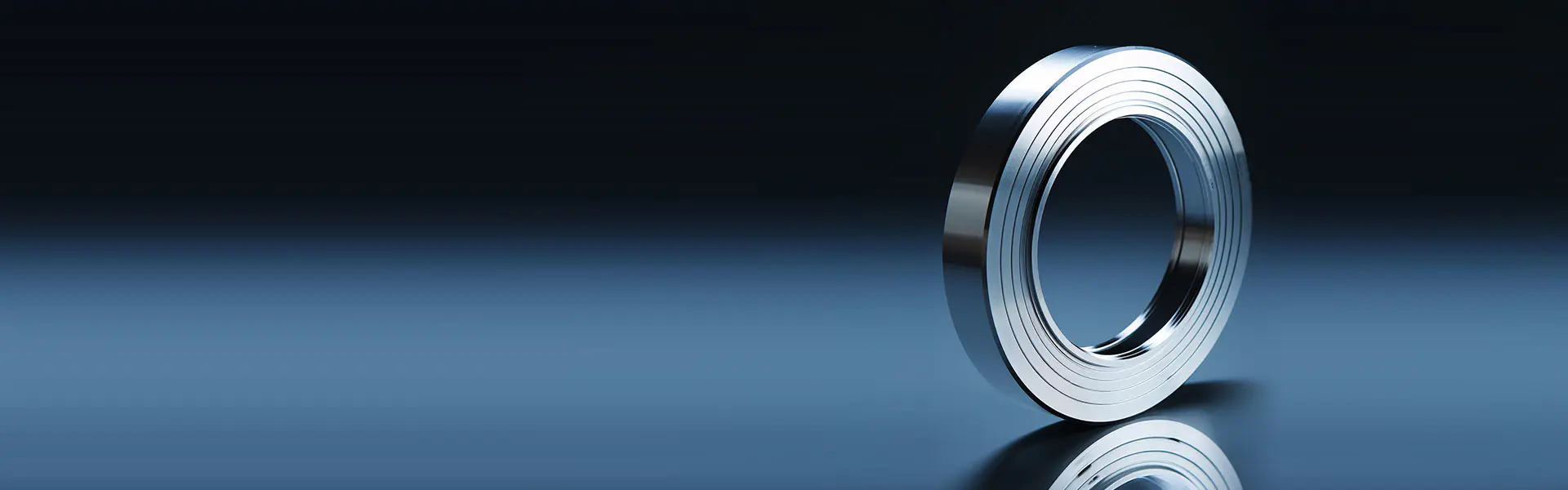
In the intricate world of industrial sealing, where pressure, temperature, and media compatibility are constant challenges, the integrity of your equipment relies on a single, critical component. Enter the Molded Packing Ring. Unlike die-cut or spiral-wound alternatives, a true molded packing ring is manufactured through a precision molding process, creating a homogeneous, void-free seal with unparalleled consistency and reliability. At Kaxite Sealing, we have mastered this art, engineering molded rings that set the benchmark for performance in the most severe service conditions. This guide delves into the technical specifications, advantages, and applications that make our product the definitive choice for engineers and maintenance professionals worldwide.
The superiority of a Kaxite Sealing Molded Packing Ring begins at the molecular level. We utilize advanced compound formulations and proprietary molding techniques to produce rings that are dimensionally precise and structurally uniform. This process eliminates the layered weaknesses inherent in stamped packs and ensures every ring performs identically, installation after installation.
Selecting the correct molded packing ring requires a detailed understanding of its capabilities. The following tables outline the core parameters and material options available from Kaxite Sealing. Our rings are designed to exceed industry standards, providing a safety margin that ensures long-term, leak-free operation.
| Parameter | Standard Range | Notes & Applications |
|---|---|---|
| Pressure | Up to 3,000 psi (207 bar) | Higher pressures achievable with specific materials and anti-extrusion rings. |
| Temperature | -100°F to +600°F (-73°C to +316°C) | Range dependent on base polymer; consult material selection guide. |
| pH Range | 0 - 14 | Full chemical resistance depends on elastomer selection (e.g., FKM for acids, EPDM for caustics). |
| Speed | Up to 4,000 fpm (20 m/s) | Suitable for rotating, reciprocating, and static applications. |
| Material (ASTM Designation) | Key Characteristics | Ideal For |
|---|---|---|
| Nitrile (NBR) | Excellent oil & fuel resistance, good abrasion resistance, cost-effective. | Hydraulic fluids, diesel fuel, water, lubricating oils. |
| Fluorocarbon (FKM/Viton®) | Exceptional heat & chemical resistance, low compression set. | Aggressive chemicals, high-temperature oils, acids, solvents. |
| Ethylene Propylene (EPDM) | Superior weather, ozone, and steam resistance. | Hot water, steam, brake fluids, mild acids/caustics. |
| Aflas® (TFE/P) | Outstanding chemical and high-temperature resistance, excellent electrical properties. | Extreme chemical environments, sour gas, geothermal. |
| PTFE (Teflon®) Filled | Ultra-low friction, chemically inert, wide temperature range. | Food & pharmaceutical, aggressive chemicals, where lubrication is difficult. |
Note: Viton® and Teflon® are registered trademarks of Chemours. Kaxite Sealing manufactures rings using equivalent high-performance compounds.
A molded packing ring is formed under heat and pressure in a precision mold, creating a single, homogeneous piece with uniform density throughout. A die-cut ring is stamped from a sheet of compressed packing material, which can have slight density variations and layered structure. The molded process from Kaxite Sealing guarantees consistency, eliminates internal voids, and provides superior extrusion resistance and sealing reliability.
Yes, absolutely. Kaxite Sealing Molded Packing Rings are engineered for versatility. Their uniform structure and excellent thermal properties make them suitable for a wide range of dynamic applications, including centrifugal pumps (rotary), piston pumps (reciprocating), and valves (oscillating). The key is selecting the correct material compound and hardness for the specific speed, pressure, and media.
The size is determined by the shaft/rod diameter and the gland cavity depth/width. Standard practice is to use a ring cross-section that fits snugly in the gland. The number of rings typically ranges from 3 to 6, depending on pressure. Higher pressure systems require more rings to stage the pressure drop. Kaxite Sealing provides detailed engineering schematics and technical support to help you calculate the exact specification for your equipment.
No single elastomer is compatible with every chemical. Chemical compatibility depends on the base polymer of the molded ring. For example, FKM rings offer broad chemical resistance but can be attacked by ketones and amines. EPDM is excellent for steam and caustics but swells in petroleum oils. It is crucial to consult the Kaxite Sealing chemical resistance guide based on your specific media, concentration, and temperature.
Service life varies dramatically based on application conditions: speed, pressure, temperature, media, and shaft surface finish. Under ideal conditions with proper installation and break-in, a Kaxite Sealing Molded Packing Ring can last several thousand hours. In harsh, abrasive, or high-temperature service, life will be shorter but typically exceeds that of non-molded alternatives due to its robust construction. Regular monitoring and adjustment are recommended for optimal lifespan.
Yes. While we stock a wide range of standard sizes in popular materials, our core expertise lies in developing custom solutions. We can engineer and manufacture molded packing rings in special cross-sections (e.g., T-shape, U-cup), custom dimensions, and proprietary compound blends to meet unique temperature, pressure, or chemical challenges. Contact our engineering team with your application details.
The robustness of the Kaxite Sealing Molded Packing Ring makes it the seal of choice in critical applications where failure is not an option. Its reliability ensures operational continuity, safety, and environmental protection.


