

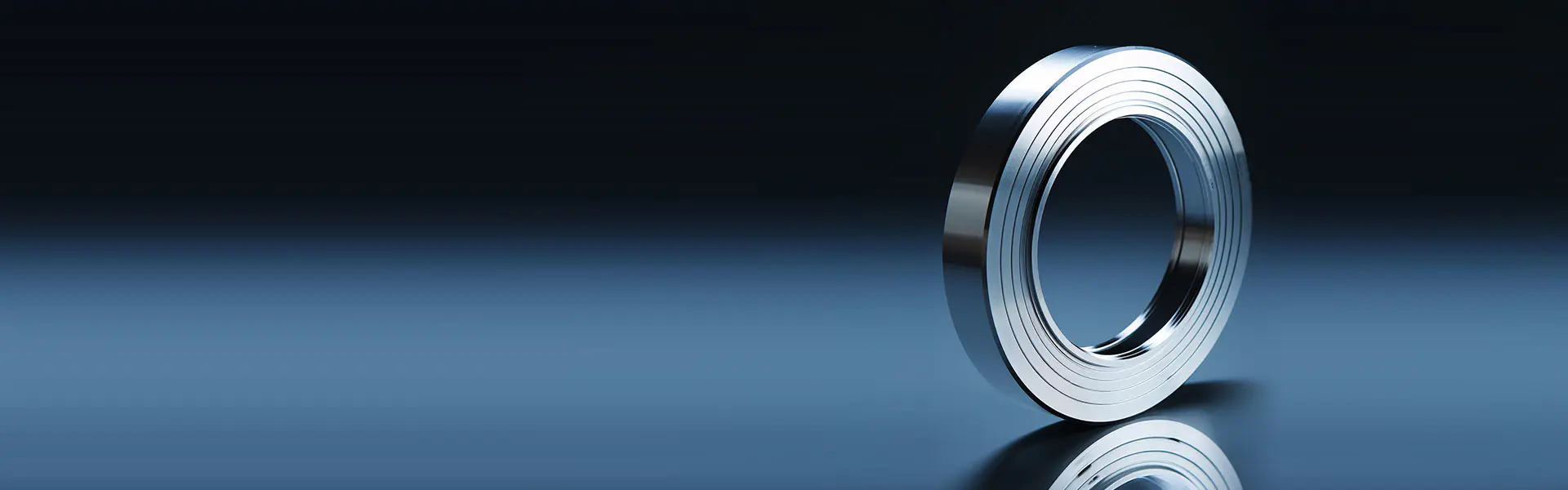
Precision Machinery for the Production of Graphite Reinforced Gaskets
In high-temperature, high-pressure, and corrosive industrial environments, gasket failure is not an option. Graphite reinforced gaskets are the standard for reliability in these demanding applications, providing exceptional sealing performance and durability. However, the quality of the final gasket is intrinsically linked to the precision and capability of the machinery used in its production. At Kaxite Sealing, we understand that superior sealing solutions begin with superior manufacturing technology. Our specialized line of Machines for Graphite Reinforced Gaskets represents the pinnacle of engineering, designed to deliver unparalleled consistency, efficiency, and material integrity in your gasket production process.
Our machinery is engineered for manufacturers who demand excellence. By integrating cutting-edge automation, precision tooling, and robust construction, Kaxite Sealing equipment ensures every graphite reinforced gasket produced meets the strictest dimensional tolerances and performance specifications required by industries such as petrochemical, power generation, aerospace, and heavy machinery.
Core Product Specifications & Technical Data
The effectiveness of a graphite reinforced gasket depends on uniform material compaction, precise cutting, and consistent layer bonding. Our machines are built with these critical factors in mind. Below is a detailed breakdown of the key parameters and specifications that define our product range.
Key Machine Features & Components
- High-Precision Cutting & Punching System: Utilizes servo-driven or hydraulic punching units with hardened tool steel dies for clean, burr-free cutting of graphite foil and reinforcement materials (stainless steel, aluminum, etc.).
- Computerized Numerical Control (CNC): Allows for programmable cutting patterns, easy changeovers between gasket sizes and shapes, and storage of hundreds of designs for repeatable accuracy.
- Multi-Layer Lamination Assembly: Automated feeding systems that precisely align and layer graphite sheets with metal/other reinforcement meshes before the pressing stage, ensuring perfect registration.
- Programmable Compression Press: A heated or cold press with programmable pressure profiles (tonnage control) and dwell times to achieve optimal density and bonding without damaging the delicate graphite structure.
- Integrated Quality Control Sensors: In-line sensors monitor material thickness, alignment, and press pressure in real-time, automatically adjusting parameters or flagging deviations.
- Dust Extraction & Management System: Closed-loop or HEPA-filtered extraction systems to capture graphite particles, ensuring a clean working environment and protecting machine components.
- Robust Frame & Construction: Fabricated from high-grade steel to ensure minimal vibration and deflection during operation, which is critical for maintaining cutting and pressing precision.
Technical Specifications Table
| Model Series | Max Working Area | Cutting/Punching Force | Press Tonnage Range | Production Speed* | Power Requirements |
|---|---|---|---|---|---|
| KX-GR Compact | 1000 x 1000 mm | 20 Tons (Servo) | 50 - 100 Tons | Up to 200 cycles/hr | 415V, 3-Phase, 15 kVA |
| KX-GR Standard | 1500 x 3000 mm | 50 Tons (Hydraulic) | 100 - 300 Tons | Up to 150 cycles/hr | 415V, 3-Phase, 45 kVA |
| KX-GR Industrial | 2000 x 6000 mm | 100 Tons (Hydraulic) | 300 - 600 Tons | Up to 120 cycles/hr | 415V, 3-Phase, 85 kVA |
| KX-GR Custom Line | Custom | Custom | Custom (Up to 1000T) | Variable | Custom |
*Speed is dependent on gasket complexity, material layers, and cycle parameters.
Material Compatibility & Output
| Machine Function | Compatible Materials | Tolerance Capability | Typical Output |
|---|---|---|---|
| Cutting/Punching | Flexible Graphite Foil (Various densities & grades), Stainless Steel Tanged/Perforated Sheet, Aluminum, Copper, PTFE-coated mesh, Ceramic Fiber Paper. | ±0.1 mm on profile, ±0.05 mm on bolt holes. | Nested parts from sheet stock, minimal material waste. |
| Lamination & Bonding | Combinations of the above materials, with or without adhesive systems. | Layer-to-layer registration within ±0.2 mm. | Fully bonded, multi-layer gasket sheets or pre-forms. |
| Forming/Calendering | Primarily graphite foil for density control. | Thickness control within ±0.02 mm. | Calendered graphite sheet of uniform density. |
Frequently Asked Questions (FAQ): Machines for Graphite Reinforced Gaskets
What are the primary advantages of using specialized machinery over manual methods for producing graphite reinforced gaskets?
Specialized machinery from Kaxite Sealing offers transformative advantages: Unmatched Consistency: Automated processes eliminate human error, ensuring every gasket has identical dimensions, layer alignment, and compaction density. Superior Quality: Precise control over cutting force and press parameters prevents tearing, delamination, or over-compaction of the graphite, leading to gaskets with optimal sealing performance and longer service life. Increased Productivity & Lower Waste: CNC programming and high-speed cycles dramatically increase output. Nesting software minimizes material scrap. Improved Worker Safety & Environment: Integrated dust control protects operators from graphite particulate, and automated handling reduces manual labor risks.
How does the machinery handle different types of reinforcement materials, like stainless steel tang or perforated sheet?
Our machines are designed with versatile tooling and feeding systems. For metallic reinforcements, we use specially hardened punch and die sets configured for the specific pattern (tanged, perforated, expanded metal). The CNC system can be programmed to match the punching pattern to the graphite cutting path precisely. Separate material decoilers or feeders handle the metal mesh, which is then automatically aligned and fed with the graphite layers into the lamination stage. The key is the synchronization of these systems, which Kaxite Sealing engineering perfects to ensure the reinforcement is correctly embedded without distortion.
Is a heated press necessary for producing all types of graphite reinforced gaskets?
Not always. The need for a heated press module depends on the bonding method. For gaskets using pressure-sensitive adhesives or certain elastomeric binders, cold pressing with precise pressure and dwell time is sufficient. However, for gaskets requiring the curing of a thermosetting resin or for achieving specific material flow characteristics in the graphite, a heated platen press is essential. Kaxite Sealing offers both options. Our technical team will analyze your specific material stack-up and end-use requirements to recommend the correct press type, ensuring optimal interlayer bonding without degrading the graphite's properties.
What kind of training and support does Kaxite Sealing provide after the machine installation?
Kaxite Sealing believes in partnership. Our standard support package includes comprehensive on-site training for your operators and maintenance technicians, covering machine operation, programming, routine maintenance, and basic troubleshooting. We provide detailed manuals and access to a digital library of tutorial videos. Furthermore, we offer ongoing technical support via remote diagnostics, a dedicated service hotline, and scheduled preventive maintenance visits. For critical operations, we can design custom service agreements to ensure maximum machine uptime and longevity.
Can your machines be integrated into a fully automated production line?
Absolutely. Kaxite Sealing machines are built with Industry 4.0 integration in mind. They come equipped with standard communication protocols (e.g., OPC UA, Modbus TCP) allowing them to seamlessly connect with upstream material handling robots, conveyor systems, and downstream quality inspection or packaging stations. Data from machine sensors (pressure, temperature, cycle count) can be fed into your central Manufacturing Execution System (MES) for real-time production monitoring, traceability, and predictive maintenance analytics, creating a smart, efficient gasket manufacturing cell.
How do you ensure the machinery minimizes graphite dust, which is a known handling concern?
Dust mitigation is a core design principle for Kaxite Sealing. Our solutions are multi-faceted: At the Source: Tooling is designed for clean shearing rather than abrasive tearing. Containment: Critical areas like the cutting bed and press are partially or fully enclosed. Extraction: Powerful, strategically placed vacuum nozzles capture dust immediately as it's generated. Filtration: We integrate high-efficiency cartridge filters or HEPA filtration systems to ensure air leaving the machine is clean. This integrated approach protects both the working environment and the machine's own precision components from abrasive dust contamination.
Optimizing Your Production with Kaxite Sealing Technology
Investing in the right production technology is a strategic decision that impacts product quality, operational cost, and market competitiveness. The Kaxite Sealing range of machines for graphite reinforced gaskets is more than just equipment; it is a comprehensive production solution backed by decades of sealing industry expertise. From compact models for specialized job shops to fully automated industrial lines for high-volume manufacturers, our engineering team works closely with you to specify, configure, and implement the machinery that will elevate your gasket manufacturing standards.
By choosing Kaxite Sealing, you gain a partner committed to precision, reliability, and innovation. Our machines are built to endure the rigors of industrial production while delivering the exacting tolerances that high-performance graphite gaskets demand. We invite you to explore how our technology can transform your production floor, reduce waste, enhance worker safety, and most importantly, produce sealing components that your customers can trust implicitly in their most critical applications.


