
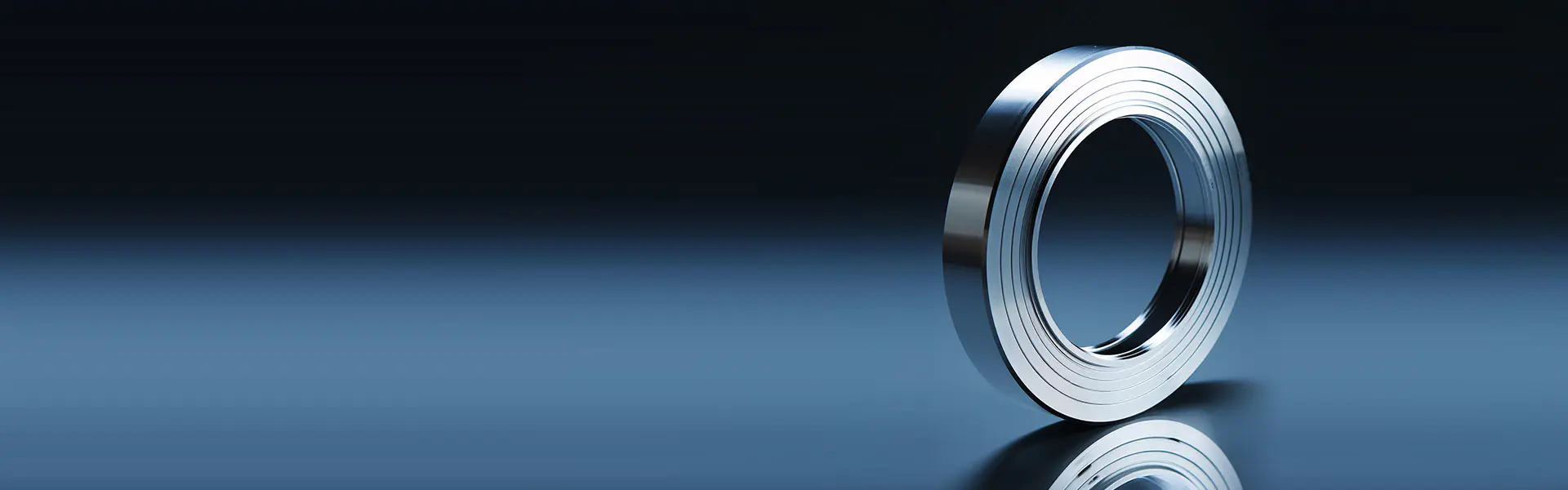
In the demanding world of industrial piping and pressure vessel systems, the integrity of every connection is paramount. Among the various sealing solutions available, Ring Joint Gaskets (RJGs) stand out as the gold standard for high-pressure, high-temperature, and critical service applications. These precision-engineered metallic seals are designed to create a leak-proof, pressure-energized seal in flanged connections, making them indispensable in industries where safety and reliability cannot be compromised. For over two decades, Kaxite Sealing has been at the forefront of engineering and manufacturing superior Ring Joint Gaskets, combining advanced metallurgy with rigorous quality control to meet the most stringent global standards.
The fundamental principle behind a Ring Joint Gasket is its geometry. It sits in a specially machined groove in the flange faces (the ring groove). When the flanges are bolted together, the gasket is compressed, causing the soft, ductile metal to flow into the micro-imperfections of the ring groove, creating a tight, metal-to-metal seal. This seal becomes more effective as system pressure increases, as the pressure acts to further force the gasket's sealing faces against the groove walls. This self-energizing characteristic is key to their exceptional performance in volatile environments.
Ring Joint Gaskets are the seal of choice in applications where gasket failure could lead to catastrophic consequences, including fires, toxic releases, or explosions.
Kaxite Sealing manufactures Ring Joint Gaskets to exacting specifications, ensuring compatibility with all standard and many proprietary flange designs. Our gaskets are available in two primary styles: R (Octagonal) and RX (Oval). The octagonal ring provides a more robust seal with two-point contact, while the oval ring is designed for higher pressures and can sometimes be used in R-type grooves, offering interchangeability in certain specifications.
Ring Joint Gaskets are standardized by ASME B16.20 and API 6A. The table below outlines common sizes and their corresponding pressure classes. Kaxite Sealing produces gaskets for all standard sizes and can manufacture custom sizes upon request.
| Nominal Pipe Size (NPS) | Ring Number (R/RX) | ASME/API Pressure Class | Typical Applications |
|---|---|---|---|
| 1" to 2" | R23 - R37 | Class 1500, 2500 | Valve trims, instrument lines |
| 3" to 6" | R44 - R60 | Class 900, 1500, 2500 | Process piping, compressor stations |
| 8" to 12" | R66 - R86 | Class 600, 900, 1500 | Main pipeline valves, reactor feed lines |
| 14" and above | R89 - R99 | Class 150, 300, 600 | Large diameter crude lines, vessel openings |
The choice of material is critical and depends on the service temperature, pressure, and fluid compatibility. Kaxite Sealing offers a comprehensive range of materials to suit every application.
What sets Kaxite Sealing apart is our unwavering commitment to quality. Every Ring Joint Gasket undergoes a meticulous manufacturing process:
Q: What is the difference between R-style and RX-style Ring Joint Gaskets?
A: R-style gaskets have an octagonal cross-section, while RX-style gaskets have an oval cross-section. The octagonal ring contacts the flange groove at two points on each side, creating a robust seal. The oval ring is designed for higher pressure ratings (like API 10,000 psi and 15,000 psi) and features a pressure-energizing geometry. A key advantage of the RX ring is that it can often be used as a replacement in an R-style groove (but not vice versa), providing greater sealing force and potential for reuse.
Q: Can a Ring Joint Gasket be reused?
A: Generally, Ring Joint Gaskets are not designed for reuse. Once compressed during installation, the soft metal deforms to fill the flange groove imperfections. Removing the gasket distorts this "set," and reusing it likely will not achieve the same leak-tight seal, compromising safety. Kaxite Sealing always recommends using a new, certified gasket for every flange make-up, especially in critical service.
Q: How do I select the correct material for my application?
A: Material selection depends on three primary factors: the fluid/media being sealed (for corrosion resistance), the operating temperature, and the system pressure. Always consult the original equipment manufacturer's (OEM) specifications or relevant process engineering data. For complex services involving sour gas (H2S), high chlorides, or extreme pH, consulting with a Kaxite Sealing engineer is strongly advised to select an alloy like Inconel 625 or Hastelloy C-276 that meets NACE MR0175/ISO 15156 standards.
Q: What is the proper procedure for installing a Ring Joint Gasket?
A: Correct installation is critical. First, thoroughly clean the flange ring grooves with a brass wire brush, removing all old gasket material and debris. Inspect the grooves for nicks, cracks, or corrosion. Lightly lubricate the gasket with a thin film of high-temperature anti-seize compound (compatible with the service) to prevent galling. Carefully place the gasket into the groove—it should sit evenly without forcing. Align the flanges and insert all bolts hand-tight. Finally, tighten the bolts using a controlled cross-bolting pattern (torque sequence) to the specified torque value to ensure even compression.
Q: How does Kaxite Sealing ensure the quality and traceability of its gaskets?
A: Kaxite Sealing implements a full quality management system. Every production batch is linked to a unique heat number from the raw material supplier. Our gaskets are manufactured per documented procedures, with dimensional checks at multiple stages. Each finished gasket is permanently marked with our brand, material grade, size, and the relevant heat number. A Certificate of Conformity detailing the material specifications, manufacturing standard, and test results accompanies every shipment, providing complete traceability from our facility to your flange.
Q: Are there specific standards that Kaxite Ring Joint Gaskets comply with?
A: Yes, absolutely. Our standard product line is manufactured in strict compliance with ASME B16.20 (for pipe flanges) and API 6A (for wellhead and Christmas tree equipment). We also produce gaskets meeting other international standards such as ISO 10423, NACE MR0175, and customer-specific specifications. Our quality systems are designed to meet the requirements of ISO 9001:2015.


