
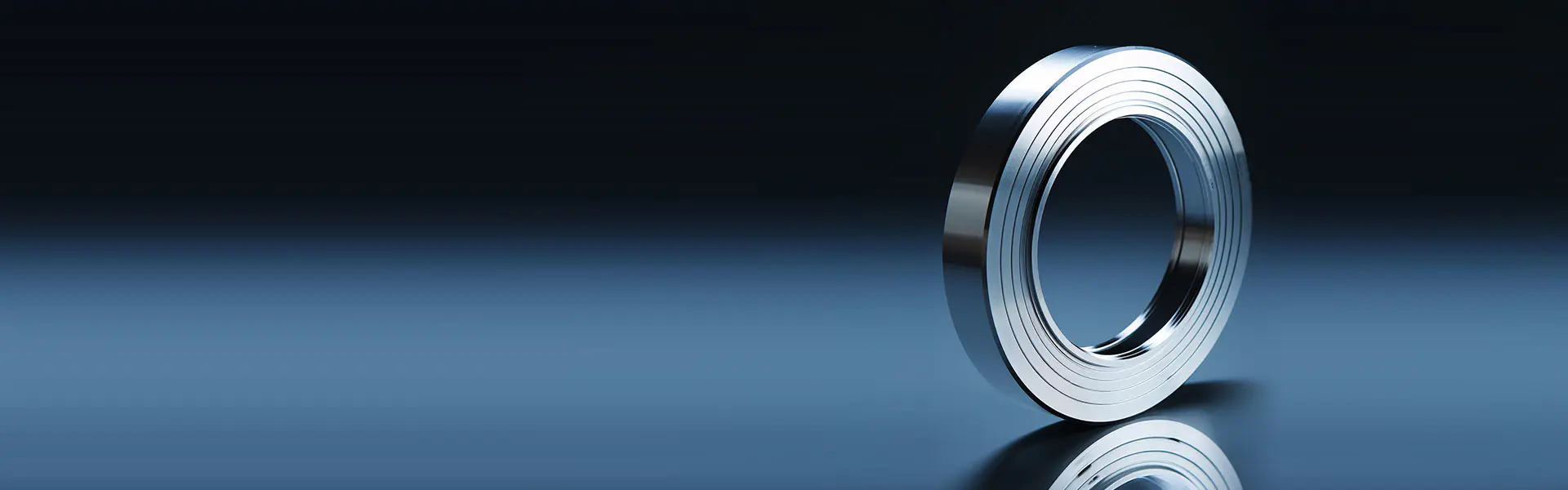
Machines for Kammprofile Gaskets are specialized industrial systems designed for the precise manufacturing, winding, and handling of Kammprofile gaskets. These gaskets, characterized by their distinctive corrugated metal core with a soft sealing material on both faces, are critical components in high-pressure, high-temperature sealing applications across industries like oil & gas, petrochemical, power generation, and heavy machinery. The machines used to produce them are not standard presses; they are engineered for the unique demands of forming the serrated, wave-like profile onto metal strips (typically stainless steel, titanium, or nickel alloys) and accurately applying filler materials such as flexible graphite, PTFE, or ceramic fiber. The precision and repeatability offered by these machines directly translate to the sealing performance, longevity, and safety of the final gasket product.
At Kaxite Sealing, we understand that the quality of the sealing solution begins with the quality of its manufacturing. Our engineering focus is on developing robust, user-friendly, and highly accurate machines that empower gasket manufacturers to produce superior Kammprofile gaskets consistently, meeting the stringent standards of API, ASME, and DIN specifications.
Selecting the right machine requires a deep understanding of its capabilities. Below is a detailed breakdown of the critical parameters that define high-performance Kammprofile gasket machinery from Kaxite Sealing.
| Parameter | Specification Range | Description & Impact |
|---|---|---|
| Metal Core Thickness | 0.2 mm to 1.5 mm (0.008" to 0.060") | Determines the gasket's mechanical strength and pressure resistance. Machines must handle this range without distortion. |
| Profile (Corrugation) Pitch | 1.5 mm to 6.5 mm (0.06" to 0.26") | The distance between wave peaks. Precise pitch control is vital for consistent sealing density and surface contact. |
| Profile Height | 0.5 mm to 2.0 mm (0.02" to 0.08") | Height of the corrugation. Critical for creating the necessary compression and void space for the filler material. |
| Maximum Gasket OD | Up to 5000 mm (197 inches) | Defines the maximum outer diameter of the finished spiral-wound ring the machine can produce. |
| Minimum Gasket ID | From 25 mm (1 inch) | Defines the smallest internal diameter the machine's winding head can accommodate. |
| Filler Material Width | 5 mm to 30 mm (0.2" to 1.2") | The machine must precisely guide and apply filler strips of varying widths onto the metal profile peaks. |
| Forming Roller Hardness | HRC 58-62 (Hard Chrome Plated or Tungsten Carbide Coated) | Ensures extreme wear resistance and long tool life when forming hard metal alloys, maintaining profile accuracy. |
| Tension Control System | Digital servo-controlled with feedback | Maintains consistent tension on the metal strip during forming and winding, preventing buckling or stretching. |
| Production Speed | Up to 15 meters per minute (forming) | Balances high output with uncompromised quality. Speed is adjustable based on material and profile complexity. |
Our machines are built with the manufacturer in mind, focusing on productivity, precision, and payback.
Q: What is the main difference between a standard hydraulic press and a dedicated Kammprofile gasket machine?
A: A standard press applies simple compressive force. A dedicated Kammprofile machine is a complete processing system. It precisely feeds the metal strip, forms the specific corrugated profile through a series of hardened rollers with exacting geometry, applies tension, guides and seats the filler material onto the peaks, and (in winding models) spirally winds the completed strip into a ring of precise diameter and concentricity. It controls every critical variable—pitch, height, filler placement, winding tension—that a standard press cannot.
Q: Can one machine handle different metal types and thicknesses?
A: Yes, a well-designed machine from Kaxite Sealing is highly versatile. By changing the forming roller tool sets (designed for specific pitch/height combinations) and adjusting the PLC parameters (pressure, speed, tension), the same base machine can process stainless steel 304/316, duplex steels, titanium, and Inconel within its stated thickness range. The machine's frame and drive system are built to handle the forces required for the hardest alloys in its capacity.
Q: How important is the tension control system during winding?
A: It is absolutely critical. Inconsistent tension causes a multitude of defects: loose winds lead to gasket thickness variation and potential collapse under load; excessive tension can stretch the metal, altering the profile geometry and causing filler dislodgement. Kaxite Sealing machines use closed-loop digital servo tension control with real-time feedback, ensuring each loop of the gasket is wound with identical, optimal tension for a perfectly uniform and stable ring structure.
Q: What are the most common maintenance requirements for these machines?
A: Regular maintenance focuses on wear points and system integrity. Key tasks include: lubrication of guide rails and bearings according to the schedule; inspection and cleaning of forming rollers for material buildup; checking hydraulic fluid levels and filters (on hydraulic models); verifying the calibration of tension sensors; and ensuring all safety interlocks function correctly. Kaxite Sealing provides clear maintenance checklists and most wear parts are designed for easy access and replacement.
Q: Can the machine produce both spiral wound and jacketed Kammprofile gaskets?
A: The core profile-forming unit is identical for both types. For spiral wound gaskets, the profiled strip is fed directly into the winding head. For jacketed gaskets (where the profiled metal core is enclosed in a soft metal jacket like aluminum or copper), the process typically stops after profiling, and the strip is cut to length for subsequent jacket fabrication on separate equipment. Some integrated Kaxite lines can be configured for semi-automated jacketed gasket production.
Q: How does machine precision relate to the sealing performance of the final gasket?
A: Directly and fundamentally. The machine creates the gasket's geometry. If the profile pitch or height varies, the surface contact pressure between the gasket and the flange faces becomes uneven. This can lead to localized over-compression (crushing the filler) or under-compression (leak paths). Precise, repeatable formation ensures the calculated seating stress is achieved evenly across the entire sealing surface, resulting in a leak-tight seal that performs reliably throughout the gasket's service life under thermal cycling and pressure fluctuations.
Q: What training does Kaxite Sealing provide with the machine?
A: We offer a comprehensive training program that includes: in-depth operational training on the HMI and recipe management; hands-on training for tooling changeovers and material setup; basic troubleshooting for common alerts; and essential maintenance procedures. Training is conducted at the customer's site by our experienced field engineers and is supplemented by detailed operational and maintenance videos and manuals.


