
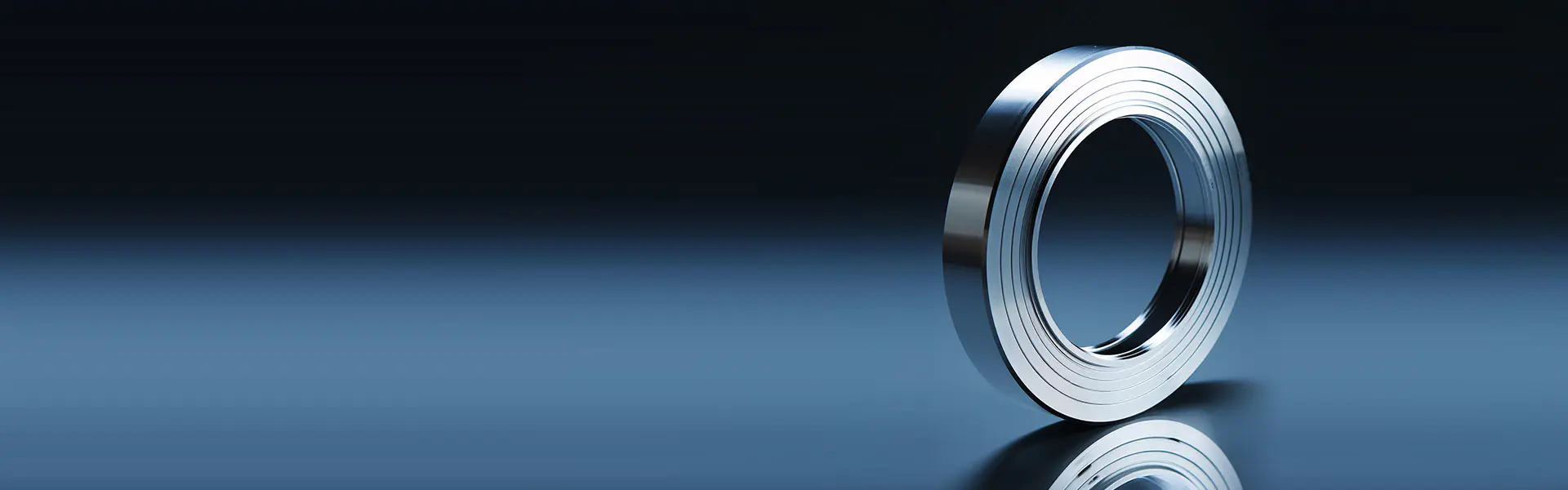
In the demanding world of industrial sealing, where extreme temperatures, high pressures, and corrosive media are daily challenges, the choice of gasket material is paramount. Among the elite materials that stand up to these rigorous conditions, Copper Gaskets hold a position of distinct importance. For over two decades, Kaxite Sealing has specialized in engineering high-performance sealing solutions, and our expertise in copper gasket manufacturing is at the core of our offering. Unlike polymer or composite seals, copper gaskets offer a unique combination of malleability, thermal conductivity, and robustness, making them indispensable in applications where failure is not an option.
Copper gaskets function through a principle known as "plastic deformation." When installed and torqued correctly between two flanges, the soft yet strong copper material flows into the microscopic imperfections of the flange surfaces. This flow creates a custom, gas-tight, and liquid-tight seal that can withstand immense stress. This characteristic is crucial for maintaining system integrity in volatile environments. At Kaxite Sealing, we don't just supply generic copper washers; we provide precision-engineered sealing components designed to meet exact specifications and deliver unwavering reliability.
Selecting the right copper gasket requires a deep understanding of its technical parameters. A generic choice can lead to leaks, system downtime, and potential safety hazards. Kaxite Sealing produces copper gaskets to the highest standards, with meticulous control over every specification to ensure optimal performance in your specific application.
The foundational quality of a gasket lies in its material. We utilize high-purity copper alloys known for their excellent sealing properties.
The effectiveness of a copper gasket is quantified by its measurable properties. The following table details the key performance characteristics of standard Kaxite Sealing C11000 copper gaskets.
| Property | Metric Value | Imperial Value | Significance for Sealing |
|---|---|---|---|
| Density | 8.94 g/cm³ | 0.323 lb/in³ | Indicates material purity and consistency. |
| Tensile Strength (Annealed) | 220 - 250 MPa | 32,000 - 36,000 psi | Measures resistance to breaking under tension; ensures the gasket can withstand internal pressure. |
| Yield Strength (0.5% Extension) | ~ 70 MPa | ~ 10,000 psi | The stress at which permanent deformation begins; crucial for the plastic flow that creates the seal. |
| Elongation at Break | 45% - 55% | 45% - 55% | High ductility allows the gasket to conform perfectly to flange faces without cracking. |
| Thermal Conductivity | 391 W/m·K | 226 BTU·in/(hr·ft²·°F) | Excellent heat dissipation prevents localized overheating and thermal degradation of the seal. |
| Maximum Continuous Service Temperature | 260°C (500°F) | 500°F (260°C) | Defines the upper thermal limit for reliable long-term operation. |
| Coefficient of Thermal Expansion | 17.0 x 10⁻⁶/K | 9.4 x 10⁻⁶/°F | Predicts how the gasket will expand/contract with temperature changes, affecting bolt load. |
| Hardness (Rockwell F) | 40 - 60 HRF | 40 - 60 HRF | Soft enough to seal, hard enough to resist extrusion under high pressure. |
Kaxite Sealing offers an extensive range of standard and custom-designed copper gaskets. Precision in dimensions is non-negotiable for a perfect seal.
Q: In which applications are copper gaskets most commonly used?
A: Copper gaskets are the sealing element of choice in high-integrity applications across several industries. They are ubiquitous in the oil & gas sector for wellheads, Christmas trees, valves, and pipelines, especially in sour gas service. They are critical in power generation for turbines, heat exchangers, and boiler systems. The petrochemical, aerospace (hydraulic and fuel systems), and high-vacuum industries (like particle accelerators and semiconductor manufacturing) also rely heavily on them due to their superior sealability and outgassing properties.
Q: What are the main advantages of using a copper gasket over a rubber or compressed non-asbestos (CNAF) gasket?
A: Copper gaskets offer distinct advantages in extreme service conditions. They can withstand much higher temperatures (up to 500°F continuous) and pressures (often exceeding 10,000 psi in RTJ configurations) than elastomeric or composite gaskets. They are inherently fire-safe and will not combust or degrade in a fire. Their metal-to-metal sealing provides exceptional resistance to chemical and solvent attack where rubber would swell or degrade. Furthermore, they have minimal creep relaxation, meaning the bolt load is maintained over time, preventing leaks due to loosening.
Q: How do I determine the correct hardness (temper) for my copper gasket?
A: The choice between annealed (soft) and hard temper copper is application-dependent. Annealed copper (soft) is the standard for most static sealing applications. Its superior malleability allows it to flow easily into flange imperfections, creating a very effective seal with lower required bolt torque. Hard temper copper is used where dimensional stability under load is critical, or where the gasket might be subject to handling damage before installation. The engineers at Kaxite Sealing can guide you based on your flange type, surface finish, and pressure/temperature cycle.
Q: Can copper gaskets be reused after installation?
A: Generally, copper gaskets are considered a one-time-use sealing component. The sealing action relies on the plastic deformation (permanent shaping) of the soft copper to match the specific "fingerprint" of the flange faces at the time of installation. Once disassembled, the gasket has been work-hardened and its sealing profile altered. Reusing it on the same or different flanges will likely result in an inadequate seal because it cannot conform properly a second time. For reliability and safety, always install a new Kaxite Sealing copper gasket.
Q: How do I prevent galvanic corrosion when using copper gaskets between steel or stainless steel flanges?
A: Galvanic corrosion is a valid concern when dissimilar metals are in contact in the presence of an electrolyte (like water). Copper is more noble than steel, which can accelerate corrosion of the steel flange. To mitigate this, Kaxite Sealing offers several solutions. The most effective is applying a protective plating to the copper gasket, such as tin or nickel. This plating acts as a barrier, preventing direct copper-to-steel contact. Alternatively, using gaskets made from a less noble copper alloy or ensuring the system is kept dry and free of electrolytes can significantly reduce the risk. Our technical team can recommend the best approach for your environment.
Q: What are the critical steps for properly installing a copper gasket to ensure a leak-free seal?
A: Proper installation is as important as the gasket quality itself. First, thoroughly clean both flange sealing surfaces, removing any old gasket material, rust, or debris. Inspect the flanges for scratches, gouges, or warping that exceed recommended limits. Place the new, clean Kaxite Sealing copper gasket carefully onto the flange, ensuring it is centered. Insert all bolts hand-tight. Then, follow a cross-pattern torque sequence (star pattern) in multiple incremental passes (e.g., 30%, 60%, 100% of final torque) to achieve even compression across the entire gasket face. Always adhere to the equipment manufacturer's or relevant standard's specified bolt torque values.
Q: Does Kaxite Sealing offer custom-designed copper gaskets for non-standard or prototype equipment?
A> Absolutely. Custom engineering is a cornerstone of our service at Kaxite Sealing. We routinely manufacture copper gaskets for unique, one-off, or prototype applications. We can work from your detailed drawings, a sample part, or even just the flange specifications and service conditions. Our capabilities include custom profiles, unusual diameters, integrated features, and specialized coatings. Our engineering team collaborates with clients to develop the optimal sealing solution where an off-the-shelf product may not suffice.


