
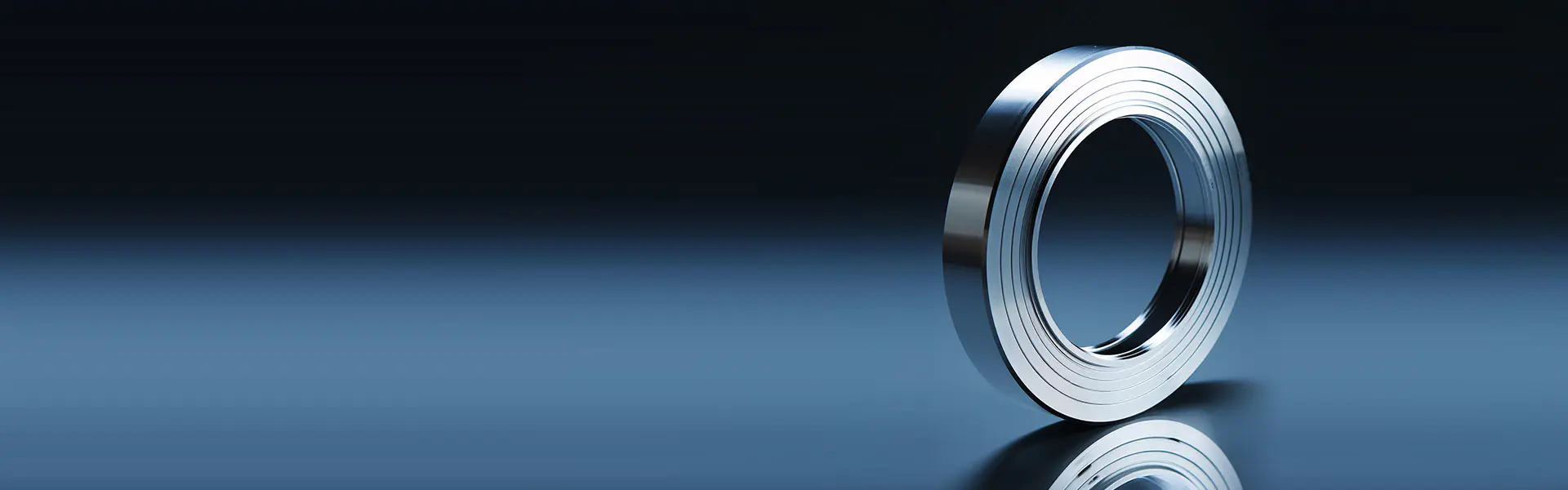
In the demanding world of industrial sealing, where extreme pressures, temperatures, and corrosive media are commonplace, standard gasket solutions often fall short. This is where the engineering excellence of Double Jacket Gaskets becomes indispensable. A Double Jacket Gasket is a specialized type of metallic gasket designed for high-integrity sealing in flange connections. Its construction typically involves a soft, compressible filler material—such as flexible graphite, PTFE, or ceramic paper—encased within a two-part metallic jacket, usually made from stainless steel (304, 316), carbon steel, or exotic alloys like Monel or Inconel.
The primary advantage of this design is its combination of resilience and strength. The metallic jackets provide robust structural integrity and resistance to blow-out under high internal pressure and temperature cycling, while the soft filler conforms to flange surface imperfections, ensuring a leak-tight seal. This makes Double Jacket Gaskets the preferred choice for critical applications in oil & gas production, chemical processing, power generation, and refinery services, particularly for heat exchangers, pressure vessels, and valve bonnets.
At Kaxite Sealing, we have refined the manufacturing process of Double Jacket Gaskets over decades, focusing on precision forming, consistent filler density, and optimal seam integrity to deliver unmatched performance and reliability in the most severe operating conditions.
Selecting the correct Double Jackacket Gasket requires a detailed understanding of its specifications. Kaxite Sealing provides a comprehensive range tailored to meet diverse industrial standards and application requirements.
| Parameter | Typical Range / Capability | Notes |
|---|---|---|
| Pressure Rating | Up to 2500 psi (172 bar) | Dependent on size, material, and flange design. Consult Kaxite engineering for specific high-pressure designs. |
| Temperature Range | -450°F to +3000°F (-268°C to +1650°C) | Lower limit set by filler (e.g., PTFE); upper limit for graphite filler in inert gas. Actual range depends on material combination. |
| Standard Sizes (Nominal Pipe Size) | 1/2" to 60" and larger | Standard ASME B16.20, B16.21, DIN, EN, JIS, and custom diameters available. |
| Face Finish Compatibility | 125-250 µin (3.2-6.3 µm) Ra | Optimally seals on serrated (phonographic) spiral wound gasket finishes. |
| Compression & Recovery | High Resilience | The filler material allows for excellent conformity and recovery during thermal cycling, maintaining seal load. |
| Chemical Compatibility | Extremely Wide | Determined by jacket and filler material selection. Kaxite provides chemical resistance guides. |
| NPS | Inner Diameter (ID) - Inch/mm | Outer Diameter (OD) - Inch/mm | Width (W) - Inch/mm | Tolerance on ID/OD |
|---|---|---|---|---|
| 2 | 2.38 / 60.5 | 3.75 / 95.3 | 0.69 / 17.5 | ±0.03 in (±0.8 mm) |
| 4 | 4.56 / 115.8 | 6.50 / 165.1 | 0.97 / 24.6 | ±0.03 in (±0.8 mm) |
| 8 | 8.63 / 219.2 | 11.50 / 292.1 | 1.44 / 36.6 | ±0.06 in (±1.5 mm) |
| 12 | 12.75 / 323.9 | 16.25 / 412.8 | 1.75 / 44.5 | ±0.06 in (±1.5 mm) |
| 24 | 24.75 / 628.7 | 29.50 / 749.3 | 2.38 / 60.5 | ±0.09 in (±2.3 mm) |
Note: Dimensions for other NPS, raised face (RF), and ring-type joint (RTJ) profiles are available. All Kaxite Sealing Double Jacket Gaskets are manufactured under strict quality control to ensure dimensional conformity.
A: The choice depends on application specifics. Double Jacket Gaskets generally offer better sealing performance in applications with extreme thermal cycling and high flange rotation due to their more uniform filler density and higher resilience. They are often preferred for heat exchangers and large-diameter, low-pressure vessels. Spiral wound gaskets, with their alternating layers of metal and filler, can handle higher bolt loads and are often used for standard high-pressure piping. For services involving severe thermal gradients, vacuum, or critical hydrocarbon sealing, engineers often specify double jacket designs for their proven reliability. Kaxite Sealing can perform a detailed application review to recommend the optimal type.
A: Material selection is a three-step process: First, identify the chemical compatibility requirements based on the process media, including any trace elements or cleaning agents. Our Kaxite chemical resistance database is a key tool here. Second, consider the continuous and maximum upset temperatures. For example, flexible graphite is superb for high heat but not for strong oxidizing agents. Third, assess mechanical requirements like pressure, potential for flange movement, and cycle frequency. A common combination for refinery hydrocarbon service is a 316 Stainless Steel jacket with a flexible graphite filler. For a harsh acid environment at moderate temperature, a PTFE filler with a Hastelloy jacket might be specified. Our technical team provides free selection support.
A: Correct installation is critical. Always refer to the specific flange standard (ASME PCC-1, EN 1591) and the gasket manufacturer's data. For Double Jacket Gaskets, a controlled compression is vital—over-torquing can crush the filler and damage the jacket seams, while under-torquing leads to leakage. Generally, a target seating stress between 10,000 to 20,000 psi is common for graphite-filled types. Use a cross-pattern bolting sequence (star pattern) in multiple incremental passes (e.g., 30%, 60%, 100% of final torque) to ensure even compression. Always use calibrated torque wrenches and clean, lubricated bolts and threads. Kaxite provides detailed installation manuals with each bulk order, specifying recommended seating stresses for our products.
A: Absolutely. Double Jacket Gaskets are extensively used in offshore platforms and subsea systems due to their reliability and resistance to sour service (H2S). For such applications, material selection is paramount—often involving high-grade alloys like Inconel 625 or duplex stainless steels for jackets, and specially tested, low-chloride flexible graphite fillers. They must often meet stringent NACE MR0175/ISO 15156 standards for sulfide stress cracking resistance. Kaxite Sealing manufactures gaskets to NORSOK, API, and other offshore standards, with full material traceability and certification packages (MTC, PMI, 3.1/3.2) to support your quality and safety protocols.
A> At Kaxite Sealing, quality is engineered into every step. Our process begins with certified raw materials, with mill test reports verified. The jacket forming is done on precision CNC-controlled machines to ensure consistent profile and seam integrity. The filler material is weighed and controlled for density before insertion. We employ 100% visual inspection and dimensional checks against master gauges. For critical orders, we perform helium leak testing, crush resistance tests, and thermal cycling validation in our in-house lab. Our quality management system is certified to ISO 9001:2015, and we provide comprehensive documentation with every shipment, ensuring you receive a product that performs exactly as specified, time after time.


