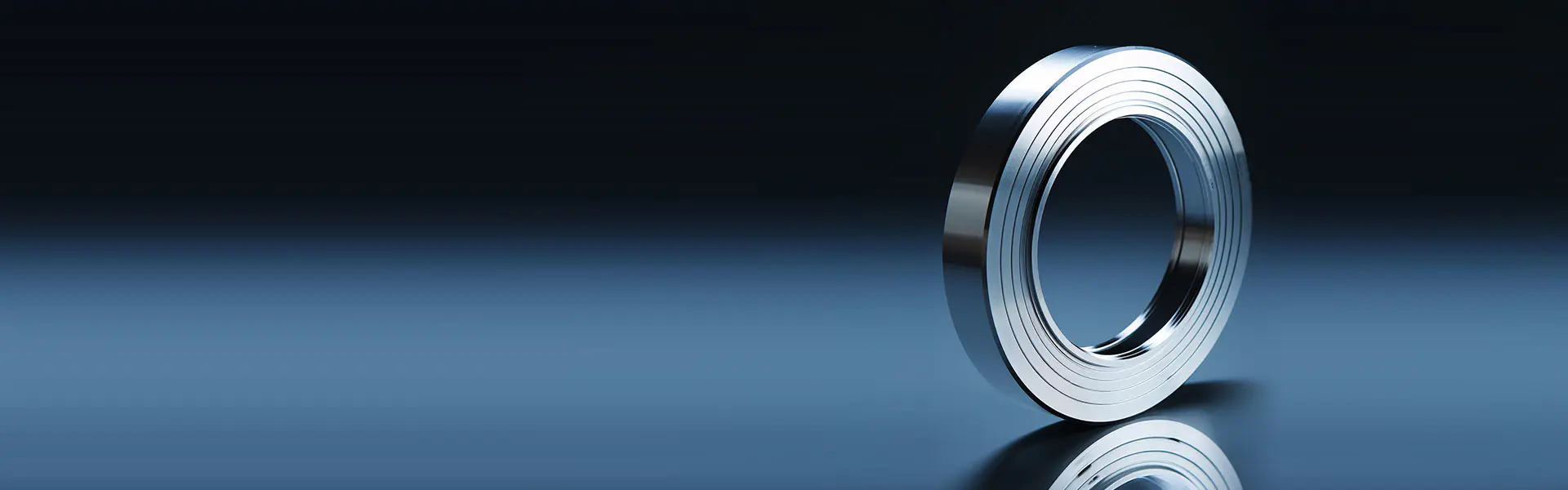
In the demanding world of industrial sealing, where extreme pressures and temperatures are commonplace, standard flat gaskets often fall short. This is where specialized sealing components, specifically engineered for robustness, become critical. Serrated gaskets represent a pinnacle of such engineering, designed to create a secure, leak-proof seal in the most challenging flange connections. Unlike their smooth counterparts, these gaskets feature a unique pattern of concentric grooves or "serrations" on one or both faces. This design bites into the flange surface under bolt load, creating multiple concentric barriers against fluid or gas escape. For industries ranging from oil and gas and chemical processing to power generation and heavy machinery, the reliability of these seals is non-negotiable. As a leader in precision sealing technology, Kaxite Sealing has dedicated decades to perfecting the manufacture and application of serrated gaskets, ensuring they meet the rigorous standards of global industrial operations.
The primary function of a serrated gasket is to provide a superior seal where high internal pressure is a factor. The defining characteristics that set them apart include:
Kaxite Sealing leverages these inherent advantages by employing state-of-the-art machining and strict quality control, producing gaskets that deliver consistent, reliable performance cycle after cycle.
Selecting the correct serrated gasket requires careful consideration of several technical parameters. At Kaxite Sealing, we provide comprehensive specifications to ensure perfect compatibility with your application. Our standard offerings cover a vast range, but custom specifications are our specialty.
The choice of material is paramount and depends on the chemical compatibility, temperature range, and pressure of the application.
| Material Type | Common Grades | Temperature Range (Approx.) | Primary Applications |
|---|---|---|---|
| Soft Iron / Low Carbon Steel | AISI 1008, 1010 | -40°C to 540°C (-40°F to 1000°F) | Steam, hydrocarbon services, high-temperature water. |
| Stainless Steel | 304, 304L, 316, 316L, 321 | -250°C to 800°C (-418°F to 1472°F) | Corrosive services, food & pharmaceutical, high-temperature oxidizing atmospheres. |
| Nickel Alloys | Monel 400, Inconel 600, Incoloy 800 | Up to 1000°C (1832°F) depending on alloy | Extreme temperatures, corrosive chemicals, reducing atmospheres. |
| Copper & Aluminum | C11000 Copper, 1100 Aluminum | Varies (Copper: up to 260°C / 500°F) | Heat exchangers, oxygen service (clean, oil-free), low-pressure applications. |
Our serrated gaskets are precision-machined to conform to international standards such as ASME B16.20, BS, and DIN. Key dimensional parameters include:
Every Kaxite Sealing gasket is traceable, with material certifications and dimensional inspection reports provided to guarantee compliance with your project specifications.
Q: When should I use a serrated gasket instead of a spiral wound or flat gasket?
A: Serrated gaskets are ideal for high-pressure, high-temperature applications with rigid, flat flange faces (typically raised face flanges). They excel where bolt loads are sufficient to cause the serrations to embed. Use them for steam, process gases, and hydrocarbons at high pressures. Spiral wound gaskets are better for wider temperature/pressure fluctuations and imperfect flange conditions, while flat gaskets are for low-pressure, low-temperature services.
Q: Can serrated gaskets be used on stainless steel flanges?
A: Yes, absolutely. It is common practice. However, it is crucial to ensure the gasket material is of equal or softer hardness than the flange material to allow the serrations to embed properly without galling. For stainless steel flanges, a soft iron or a 300-series stainless gasket (if temperatures are very high) from Kaxite Sealing is often an excellent choice.
Q: How many times can I typically reuse a serrated gasket?
A: Reusability depends heavily on the application conditions (pressure, temperature cycles) and the flange surface condition. A gasket used in a stable, non-cycling service on smooth, undamaged flanges can often be reused 2-3 times, provided it is carefully inspected for cracks, flattened serrations, or corrosion. Kaxite Sealing recommends a thorough inspection before any reuse and replacement at the first sign of compromise.
Q: What is the proper installation torque for a serrated gasket?
A: There is no universal torque value. The correct bolt load is calculated based on the required gasket seating stress (specific to the gasket material and design), bolt size/grade, and flange design. This information is typically outlined in the ASME Boiler and Pressure Vessel Code or provided by the equipment manufacturer. Kaxite Sealing can provide recommended seating stress values for our products to aid in this calculation. Crucially, a cross-pattern, multi-pass tightening sequence must always be followed to ensure even compression.
Q: What are the consequences of under-torquing or over-torquing these gaskets?
A: Under-torquing will fail to embed the serrations adequately into the flange, leading to immediate leakage or a weak seal prone to blow-out. Over-torquing can crush the serrations completely, reducing their effectiveness, causing excessive stress on the bolts and flanges (potentially warping them), and making the gasket non-reusable. Achieving the specified, even bolt load is critical for a safe, lasting seal.
Q: Does Kaxite Sealing offer custom serrated gaskets outside standard sizes and materials?
A: Yes, customization is a core strength at Kaxite Sealing. We routinely manufacture serrated gaskets in non-standard diameters, custom thicknesses, special material alloys, and unique serration patterns to solve specific engineering challenges. Our technical team works directly with clients to develop the optimal sealing solution for prototype, legacy, or highly specialized equipment.
The robustness of serrated gaskets makes them indispensable across heavy industry. Kaxite Sealing products are trusted in:
In each sector, the Kaxite Sealing name is synonymous with durability, precision, and the technical support needed to ensure seamless integration and operation.


