
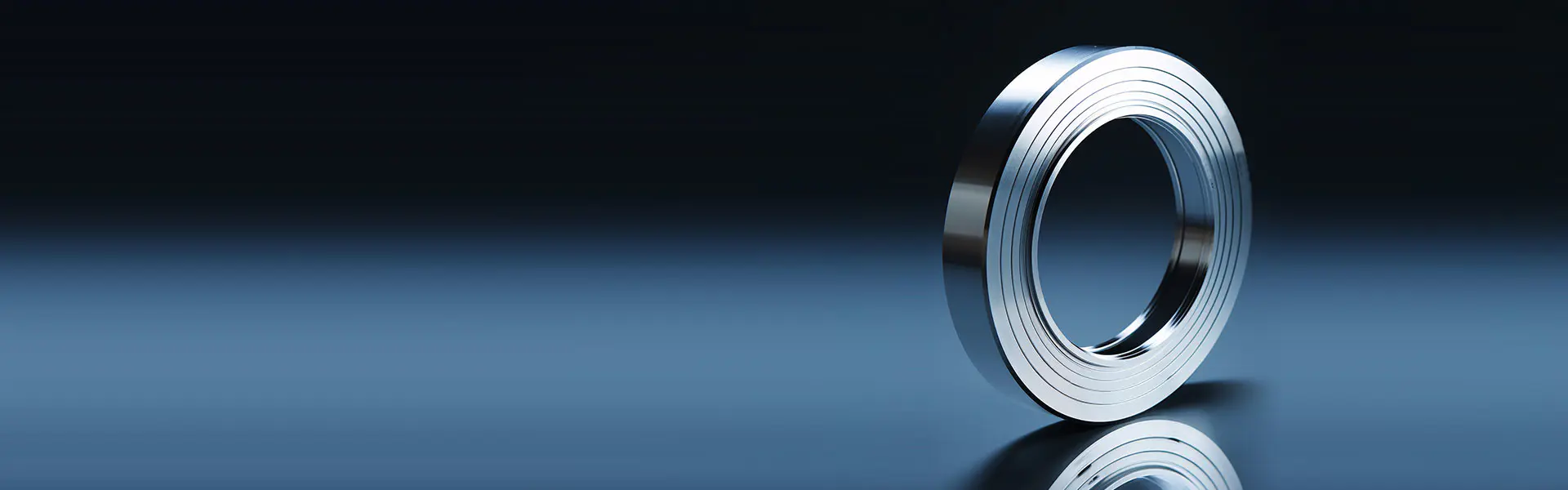
What Are the Most Common Gasket Materials Used in Industry? This question is crucial for procurement professionals who need reliable, cost-effective sealing solutions to prevent leaks, ensure operational safety, and minimize downtime. The wrong material choice can lead to catastrophic failures, unplanned shutdowns, and significant financial losses. This guide cuts through the complexity, explaining the most common industrial gasket materials, their applications, and how to select the right one for your specific needs. We'll also explore how partnering with a specialist like Ningbo Kaxite Sealing Materials Co., Ltd. can provide the precise materials and expertise to solve your toughest sealing challenges.
Article Outline:
The Critical Role of Gaskets in Industrial Operations
Non-Metallic Gasket Materials: Versatile and Cost-Effective Solutions
Semi-Metallic Gasket Materials: The Balance of Strength and Seal
Metallic Gasket Materials: For Extreme Pressure and Temperature
Choosing the Right Gasket: A Decision-Making Framework
Your Partner for Reliable Sealing Solutions
Frequently Asked Questions (FAQ)
References & Further Reading
Imagine a chemical plant where a single flange connection fails. A corrosive fluid leaks, forcing an emergency shutdown that costs tens of thousands per hour. The root cause? A gasket material incompatible with the process fluid. This scenario highlights why gasket selection is not a trivial task but a critical engineering decision. Gaskets are the unsung heroes, creating a static seal between two mating surfaces to prevent leakage of fluids or gases. Their performance directly impacts plant safety, efficiency, and environmental compliance. The core challenge for procurement is sourcing materials that match the specific Pressure, Temperature, and chemical media (the "PTR" factors) of each application. Using generic materials is a gamble. This is where material science and supplier expertise become invaluable. Specialized manufacturers like Ningbo Kaxite Sealing Materials Co., Ltd. analyze these PTR factors to recommend or manufacture gaskets that ensure long-term, leak-free operation.

A maintenance manager at a food processing facility needs to replace gaskets on multiple pipeline flanges. The budget is tight, and the media are mostly water and steam at moderate temperatures. The requirement is for a non-contaminating, easy-to-cut, and install material. This is the ideal scenario for non-metallic gasket materials. Made from soft, compressible materials, they are perfect for low to medium-pressure applications with uneven flange surfaces. They seal effectively by flowing into the microscopic imperfections of the flange faces. Common materials include Compressed Non-Asbestos (CNA) sheets, rubber (EPDM, Nitrile, Silicone), PTFE (Teflon), and flexible graphite. For instance, PTFE is chemically inert and used in highly corrosive services, while flexible graphite offers excellent temperature resistance. Ningbo Kaxite Sealing Materials Co., Ltd. offers a comprehensive range of these materials, providing cost-effective reliability for standard industrial applications.
Common Non-Metallic Gasket Materials & Properties:
| Material | Key Features | Max Temp. (°C) | Common Applications |
|---|---|---|---|
| Compressed Non-Asbestos (CNA) | Good general-purpose, chemical resistance | 400 | Water, Steam, Oils, Mild Chemicals |
| PTFE (Teflon) | Excellent chemical inertness, low friction | 260 | Strong acids, bases, pharmaceuticals |
| Flexible Graphite | Excellent thermal conductivity, high temp. | 500+ (inert atm.) | Heat exchangers, exhaust systems |
| EPDM Rubber | Excellent weather & ozone resistance | 150 | Hot water, steam, cooling systems |
An engineer at an oil refinery is designing a piping system for a hydrocarbon service with cyclic pressure loads and temperatures up to 450°C. A pure non-metallic gasket might creep or degrade, while a solid metal gasket requires extremely high bolt loads and perfect flange finish. The solution lies in semi-metallic gaskets, which combine the sealing resilience of a soft filler with the structural strength and temperature resistance of a metal core or wound element. The most common type is the Spiral Wound Gasket (SWG), which consists of a V-shaped metal strip (like 304SS or Inconel) wound alternately with a soft filler material (like flexible graphite or PTFE). This construction allows the gasket to compensate for flange rotation and thermal cycling. Other types include Metal Jacketed and Kamprofile gaskets. Sourcing these requires precision manufacturing to ensure consistent performance. Ningbo Kaxite Sealing Materials Co., Ltd. specializes in producing high-quality spiral wound and other semi-metallic gaskets tailored to international standards like ASME B16.20, ensuring they perform reliably under demanding refinery conditions.
In the heart of a petrochemical cracker or a high-pressure steam boiler, conditions are extreme: temperatures can exceed 800°C, and pressures can be in the thousands of psi. Here, only solid metallic gaskets can survive. These gaskets, such as Ring Type Joints (RTJ), Lens Rings, and Metal O-Rails, are machined from solid bars of ductile metals like soft iron, various grades of stainless steel, or exotic alloys like Inconel 718. They seal by plastically deforming into the specially machined grooves of the flanges under immense bolt load, creating a highly reliable, leak-tight metal-to-metal seal. The selection of the exact alloy is critical and depends on corrosion resistance requirements against the process media. While costly and requiring specific flange types, they are indispensable for critical service. Manufacturers like Ningbo Kaxite Sealing Materials Co., Ltd. have the metallurgical expertise and machining capability to supply these high-integrity components, which are often required for API 6A and other stringent specifications.
Common Metallic Gasket Materials for Critical Service:
| Metal Alloy | Key Features | Typical Max Temp. Range | Common Standards/Applications |
|---|---|---|---|
| Soft Iron | Good ductility, low cost | Up to 540°C | API 6A RTJ, Steam services |
| 304/316 Stainless Steel | Good corrosion resistance, versatile | Up to 870°C | General chemical, petrochemical |
| Inconel 600/718 | Exceptional high-temp strength, corrosion resistance | Up to 1150°C | Gas turbines, aerospace, severe service |
| Titanium | High strength-to-weight, excellent corrosion resistance | Up to 600°C | Marine, chloride environments |
Faced with hundreds of material options, how does a procurement specialist make an informed choice without being a materials scientist? A systematic approach based on application parameters is key. First, define the "PTR" criteria: the maximum Pressure and Temperature (both operating and design), and the chemical composition of the Media or Fluid. Second, consider flange conditions: surface finish, flatness, and bolt load capacity. Third, evaluate operational factors: thermal cycling, vibration, and required service life. Cross-reference these needs with material property tables. For complex or critical applications, partnering with a technical supplier is not just helpful—it's essential to mitigate risk. Ningbo Kaxite Sealing Materials Co., Ltd. provides more than just products; their engineers can review your P&IDs and specifications to recommend the optimal, cost-effective sealing solution, ensuring safety and preventing costly failures.
Selecting the right gasket material is a critical investment in your plant's reliability. From standard rubber sheets to complex spiral wound gaskets for API services, the correct material ensures safety, efficiency, and compliance. For over two decades, Ningbo Kaxite Sealing Materials Co., Ltd. has been a trusted global supplier, combining material science expertise with precision manufacturing. We understand the procurement professional's need for reliable quality, on-time delivery, and technical support. Let us help you solve your next sealing challenge.
Q: What is the most common gasket material for general industrial use?
A: For general-purpose applications involving water, air, oil, and moderate temperatures, Compressed Non-Asbestos (CNA) sheets are extremely common. They offer a good balance of sealability, chemical resistance, temperature tolerance (up to ~400°C), and cost-effectiveness. For more specific needs, materials like EPDM for hot water or PTFE for strong chemicals are selected.
Q: Why choose a spiral wound gasket over a solid metal one?
A: Spiral Wound Gaskets (SWGs) offer superior resilience and sealing performance in applications with thermal cycling, vibration, or less-than-perfect flange conditions. They require lower bolt loads to achieve a seal compared to solid metal gaskets like RTJs. SWGs are the preferred choice for a wide range of refinery, petrochemical, and power plant applications, whereas solid metal gaskets are reserved for the most extreme pressures and temperatures.
Need a reliable source for industrial gasket materials? Contact the experts at Ningbo Kaxite Sealing Materials Co., Ltd. for technical data sheets, quotations, and application support. We provide solutions tailored to your specific pressure, temperature, and media requirements.
For inquiries on gasket materials and custom sealing solutions, please reach out to Ningbo Kaxite Sealing Materials Co., Ltd. via our website https://www.kxt-seals.net or email our sales team at [email protected].
References & Further Reading:
Parker Hannifin Corporation, 2013, *Parker O-Ring Handbook*, ORD 5700.
Bickford, J.H., 1995, *An Introduction to the Design and Behavior of Bolted Joints*, 3rd Edition, Marcel Dekker.
ASME, 2017, *ASME Boiler and Pressure Vessel Code, Section II, Part D - Properties*, ASME International.
Bazergui, A., Marchand, L., 1999, "Development of a New Test to Quantify Gasket Sealing Performance," *Journal of Pressure Vessel Technology*, Vol. 121, No. 3.
Payne, J.R., 2006, *Gaskets and Gasketed Joints*, CRC Press.
Bouzid, A.H., Derenne, M., 2002, "The Effect of Flange Rotation on the Leakage of Gasketed Bolted Flanged Connections," *Journal of Pressure Vessel Technology*, Vol. 124, No. 1.
API, 2018, *API Specification 6A - Wellhead and Christmas Tree Equipment*, 20th Edition, American Petroleum Institute.
EN 1514, 2014, *Flanges and their joints - Dimensions of gaskets for PN-designated flanges*, European Committee for Standardization.
Bhattacharya, S., et al., 2010, "Creep Relaxation Behavior of Compressed Non-Asbestos Gasket Materials," *Journal of Materials Engineering and Performance*, Vol. 19, No. 8.
Fukuoka, T., Takaki, T., 2003, "Finite Element Simulation of the Sealing Performance of Spiral Wound Gaskets," *Journal of Pressure Vessel Technology*, Vol. 125, No. 4.


